Jim Chanos, the famous Wall Street cynic, has cast a wary gaze upon real estate investment trusts that own large data centers. “This is our big short right now,” Chanos told the Financial Times. He has no doubts that cloud computing will continue to grow, but he believes that companies like Digital Realty Trust (DLR), Equinix (EQIX), and CyrusOne (CONE), are destined for trouble. His thesis: Amazon Web Services, Microsoft Azure, and Google Cloud will increasingly bypass the REITs to scale their operations by building data centers of their own. “The real problem for data center REITs is technical obsolescence,” said Chanos. “Their three biggest customers are becoming their biggest competitors. And when your biggest competitors are three of the most vicious competitors in the world then you have a problem.”
Chanos has a long record of success betting against overvalued businesses, but his assessment of the industry contrasts with Blackstone which recently purchased QTS Realty Trust for $10 billion. Meanwhile, Bill Stein, the CEO of Digital Realty Trust, quickly countered Chanos’ comments by pointing out his firm’s record bookings for the first two quarters of 2022. Yet the changing dynamics of the industry were on display Tuesday when FedEx announced that it will save $400 million annually by closing all of its data centers to move completely to the public cloud.
My rudimentary analysis of Data Realty Trust (DLR) indicates that the stock is overvalued by 10-15% relative to its underlying real estate. This kind of premium is uncomfortably high, but I’m not exactly grabbing my drumsticks for a round of Pantera. After all, the company has grown net operating income (or funds from operations, in REIT parlance) by 15% annually.
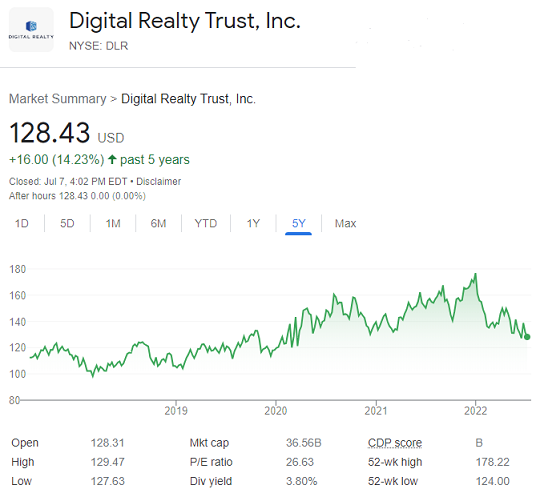
Despite the growth, there isn’t much appealing about a stock with a 3.8% dividend yield when you can earn 3% from 2-Year and 5-Year Treasury Notes. A business staring at such formidable competition should require a spread better than 80 basis points. A 25% drop in the price of the stock would be needed to produce a 5% yield.
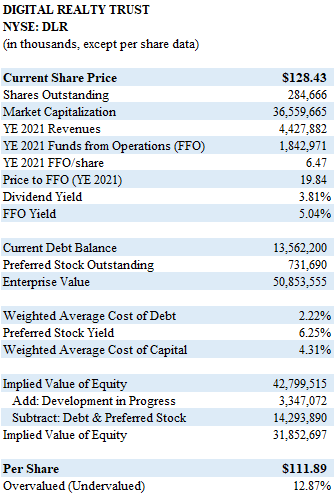
Statistics for Digital Realty Trust are presented below. The table demonstrates a valuation of its real estate assets by capitalizing 2021 funds from operations (FFO). I add development in progress at cost and subtract debt to arrive at a net asset value of $111.89 per share, which is about 13% below the price on July 7, 2022. One could argue that I should employ forward estimates of FFO for my computation, and this would be fair. However, I am using a very low capitalization rate of 4.31%. This reflects the company’s low borrowing costs (2.22%). The FFO yield was used as a proxy for the cost of equity.
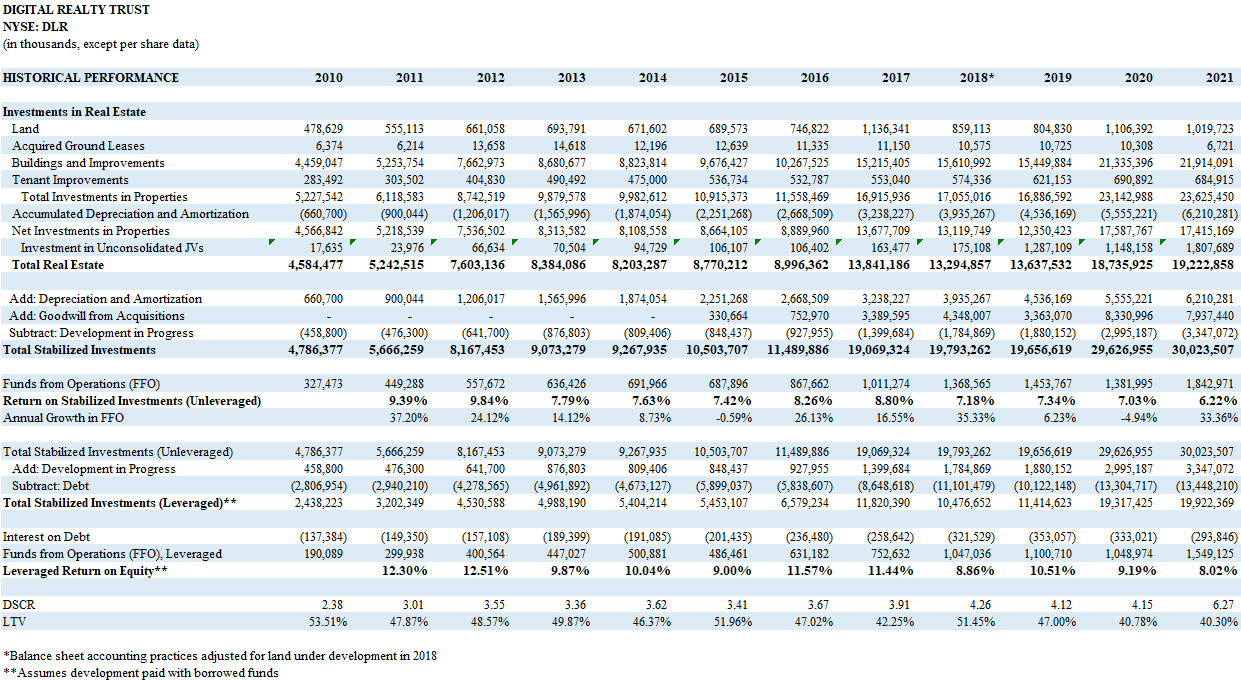
The second table shows results for the past 12 years. It indicates the rapid growth in net income for DLR, but it also shows that returns on total invested assets have been declining for years to levels below 7%. The low interest rate environment of the recent past juiced returns on equity, but even these results have become less impressive in recent periods. DLR has debt of about $13 billion on roughly $30-32 billion of assets, so the business is not exactly shy about using leverage. However, cheap debt acquired during the pandemic provided ample FFO debt coverage at 6.25x interest during 2021.
I don’t see a compelling reason to invest in DLR with the stock price trading above net asset values. And even though Jim Chanos may be hyperbolically talking his book, the threat posed by Amazon, Microsoft and Google is very real. Meanwhile, the dividends aren’t sufficient when the comparable safety of 3% Treasury yields beckons.
Note: This article contains the opinions and observations of the author. No investment recommendations are being provided and no representations are made to the accuracy of the content presented.
https://www.alchemydevelopment.com/wp-content/uploads/2022/07/Servers.jpg10811920adminhttp://www.alchemydevelopment.com/wp-content/uploads/2017/07/AlchemyLogo-1030x233.jpgadmin2022-07-07 23:13:562022-07-08 02:44:15Data Center REITs Look Like A “Big Short” To Jim Chanos, But What Do The Numbers Say?
During the pandemic months of 2020, I sought guidance about apartment industry trends from the earnings reports of major apartment real estate investment trusts. The REIT stocks had fallen by about 35% from their pre-pandemic peaks, yet the CEOs struck me as fairly optimistic about their levels of renter demand. AvalonBay (AVB), Mid America Apartment Communities (MAA) and Equity Residential Trust (EQR) had all taken the opportunity to refinance debt in the 2% range and their dividends seemed safe. In the case of MAA and AVB, they were especially bullish on Sunbelt state demographics. Although urban properties experienced weakness (particularly for EQR), suburban locations were booming. The stocks rose significantly. By the end of 2021, MAA’s share price had doubled.
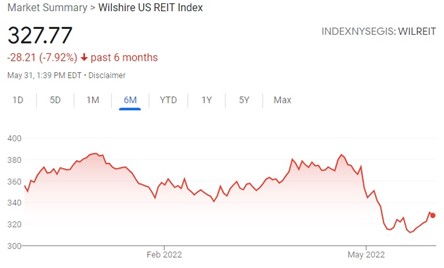
In hindsight, the massive amounts of fiscal and monetary stimulus introduced to the economy during 2020 and 2021 were generous gifts to the housing industry. It now seems apparent that these measures exceeded the output gap in the economy caused by the pandemic. Central banks are now facing extraordinary inflation pressures exacerbated by the Russian invasion of Ukraine. On April 21, 2022, Fed Chairman Jerome Powell said the job market was “too hot” and that a 50-basis point rate hike was “on the table”. Since that date, the Wilshere US REIT index has fallen 14%.
Memorial weekend offered me a chance to survey the REIT landscape once again. I present some nuggets from various companies below. This is my own research and interpretation of results, and my commentary should not be considered investment advice.
AvalonBay (AVB): A turn towards lending
AVB owns about 80,000 multifamily units and has a market capitalization of $29 billion. The dividend yield is 3.02%. AVB posted a healthy 15.9% increase in funds from operations (FFO) during the 1st quarter of 2022. The REIT continues to focus on developing new projects in the Sunbelt’s highest-growth metro areas. Five new projects representing about $700 million in investments are currently in lease-up at yields of 6.1%. The company estimates that its $4 billion development pipeline will have a yield-on-cost of 5.5%. Meanwhile, AVB exited 3 assets in the New York metro area during the quarter at a weighted average cap rate of 3.9%.
These development yields are probably satisfactory in a world where bonds still yield less than 3%, but AVB has calculated the math and decided that lending to other developers may be more profitable. AVB has established the Structured Investment Program to make mezzanine loans and preferred equity investments. They aim to grow the pool of capital to $500 million in 2-3 years. In addition to an expanded line of credit, AVB plans an equity share offering as needs arise in the amount of $495 million. AVB figures that mezzanine debt earning 8-12% is a low-risk way to deploy its cheap cost of capital. The Structured Investment Program isn’t a massive change of direction, but it would seem to indicate that runaway cost inflation has narrowed the opportunities to generate significant shareholder gains from development.
AVB has declined by 22.5% since it’s April peak, yet the company (along with MAA) remain the best ways to invest in the long-term Sunbelt demographic housing story.
I was intrigued by the 5.89% dividend yield available to shareholders of LTC Properties at current market prices. LTC has a market cap of $1.52 billion. LTC invests in seniors housing and health care properties primarily through sale-leasebacks, mortgage financing, joint-ventures and structured finance solutions, including preferred equity and mezzanine lending. LTC’s investment portfolio includes 202 properties in 29 states with 33 operating partners consisting of real property investments, first mortgages, mezzanine loans, working capital notes and unconsolidated joint ventures. Based on its gross investments, LTC’s investment portfolio is comprised of approximately 50% seniors housing and 50% skilled nursing properties.
My interest in LTC didn’t go far. Although occupancies continue to improve from the challenges presented during the pandemic, several operators in the portfolio remain under pressure. LTC, like AvalonBay has increased its focus on mortgage financing and mezzanine lending to operators and developers of senior housing. The rates charged to the developers and operators are well in excess of 7%, so the company should be able to leverage its balance sheet. Two weeks ago, LTC raised $75 million in senior unsecured notes at 3.66%. The company has a strong tailwind of demographics at its back, and occupancy should continue to recover. On the other hand, one must wonder about the credit quality of the operators in need of financing between 7.5% and 10% versus conventional bank loans.
The entire skilled nursing industry is facing tremendous pressure. Since the start of the pandemic, the skilled nursing industry has lost 241,000 workers or 15.2% of its total workforce. Wendy Simpson, CEO, also raised concerns about the efforts by Medicare to reduce reimbursement rates for skilled nursing. Last month, the Centers for Medicare and Medicaid Services (CMS) announced a $320 million cut in the reimbursement rate. This will undoubtedly put pressure on marginal operators. There is possibly an argument to be made that the stock has priced in these challenges, and LTC could capitalize on distress to increase its market share.
Blacktone’s REIT: Premium properties…at a price.
Blackstone (BX) has been aggressively growing it’s REIT over the past two years. BREIT has about $102 billion of assets and a net asset value of $66 billion. The annualized distribution rate is 4.5%. It is a non-publicly listed real estate trust that requires investors to be accredited, however the bar to invest is low – $2,500 is the minimum purchase. Fifty percent of the assets are concentrated in the residential sector and BREIT now owns 232,000 units including a massive portfolio of single-family rental homes. In July of 2021, BREIT purchased the 18,909-home inventory of Home Partners of America for $5.9 billion. BREIT will also become a major player in university housing by purchasing American Campus Communities for $13 billion. The deal was announced in April. Industrial represents 29% of the portfolio. BREIT also owns the net leases for the Mandalay and Bellagio hotels in Las Vegas and recently concluded the purchase of the 3,000 room Cosmopolitan through a joint venture.
Blackstone’s REIT offers investors a chance to earn a good yield on some of the finest real estate in North America. The share price is pegged to the net asset value, so an investment in BREIT should be insulated from the whims of the public markets. Blackstone has one of the most talented teams in the industry and can use its enormous balance sheet to uncover unique investment opportunities. However, an investor in BREIT needs to be aware of the fee structure. It isn’t cheap. There is a 3.5% broker commission fee and a 0.85% annual stockholder servicing fee. Blackstone, as the Adviser, receives a management fee calculated at 1.25% of net asset value. Finally, the Special Limited Partner (Blackstone) is entitled to 12.5% of the upside in NAV over a 5% hurdle.
The performance participation fee can be very large. In 2021, it amounted to $1.37 billion on revenues of $3.7 billion. The Special Limited Partner opted to receive this compensation in the form of shares at the end of December 2021. In January, a portion of the shares were redeemed for $566 million. In fairness, the massive scale-up in operations during 2021 and the cap rate compression that occurred during the year created a windfall that is unlikely to be as large in the future. The provision also contains a “claw-back” and “high water mark” condition which means that any declines in net asset value essentially subtract from the ability to earn the fee in the future. The fees are also not excessive when compared with what a private investor would face in a typical private real estate syndication transaction.
Due to the fee structure, investors should look at BREIT the way they would evaluate a private property acquisition: plan to hold the investment for longer than five years and let the Blackstone machine do the heavy lifting. I would also use BREIT as a sort of private property investment gut check. When evaluating investment prospects, Charlie Munger often asks himself, “Can it beat Wells Fargo? Can it beat See’s Candies?” In this case, ask yourself, “Can the deal I’m looking at for Shady Lane Apartments beat Blackstone’s REIT”? Lately, the answer is usually… “probably not”.
Broadmark Realty Capital: Cheap for a reason?
Another REIT that captured my attention was Broadmark Realty Capital (BRMK), a mortgage lender with a dividend yield of 11.44%. The market cap of the company is about $975 million and the stock is down by nearly 29% over the past year. BRMK makes construction loans, bridge loans and land development loans. Their website boasts the “Highest Degree of Leverage” with the ability to “loan against the completed value of your project, with no loan-to-cost requirements.” At the end of the 1st quarter of 2022, the loan portfolio had a weighted average interest rate of 10.4% and weighted average maturity date of 18 months. BRMK requires that their loans do not exceed 65% of estimated completed value.
BRMK had about $97 million of cash on its balance sheet at the end of the quarter, largely the result of $100 million of proceeds raised from an unsecured debt offering in November of 2021 at 5%. The company has about $931 million in loans on its balance sheet against the only debt of $100 million in unsecured notes. Apartments and senior living account for about 19% of the assets. Residential lots and single-family homes make up another 12% each.
It was unsettling to read that BRMK has over $186 million of loans in contractual default at the end of the 1st quarter of 2022. The company also has about $63 million in real estate assets on the balance sheet from foreclosures. BRMK has the ability to raise $200 million through at-the-market share offerings but has not issued any new shares through the end of the first quarter. It seems very possible that the market is pricing in a dilution of shareholders, or a dividend cut. Either way, loaning money to developers at high interest rates sounds like a great business, until it’s not.
Bert Hancock, May 31, 2022
Note: This article contains the opinions and observations of the author. No investment recommendations are being provided and no representations are made to the accuracy of the content provided.
http://www.alchemydevelopment.com/wp-content/uploads/2017/07/AlchemyLogo-1030x233.jpg00adminhttp://www.alchemydevelopment.com/wp-content/uploads/2017/07/AlchemyLogo-1030x233.jpgadmin2022-05-31 21:08:452022-07-07 23:10:11REITs are down by 14% since April. What’s going on?
“Grief is nature’s most powerful aphrodisiac” – Chazz Reinhold (Will Ferrell), Wedding Crashers (2005).
Back in 2005, I watched in disbelief while apartment leases were being broken left and right as residents began to purchase homes at a frenzied pace. While the economy boomed, the apartment industry suffered. Now, some have begun to whisper about the formation of a new bubble stimulated by the zero-rate environment established by the Federal Reserve to prop up an economy battered by the pandemic. In a surreal world where low wage service workers struggle to pay rent, more affluent renters have the sugar rush of cheap money to feed a new home-buying surge. Throw in a desire for more space to work from home and host dinner guests in the backyard, and buying a house… well, as Owen Wilson would say, “just, wow”.
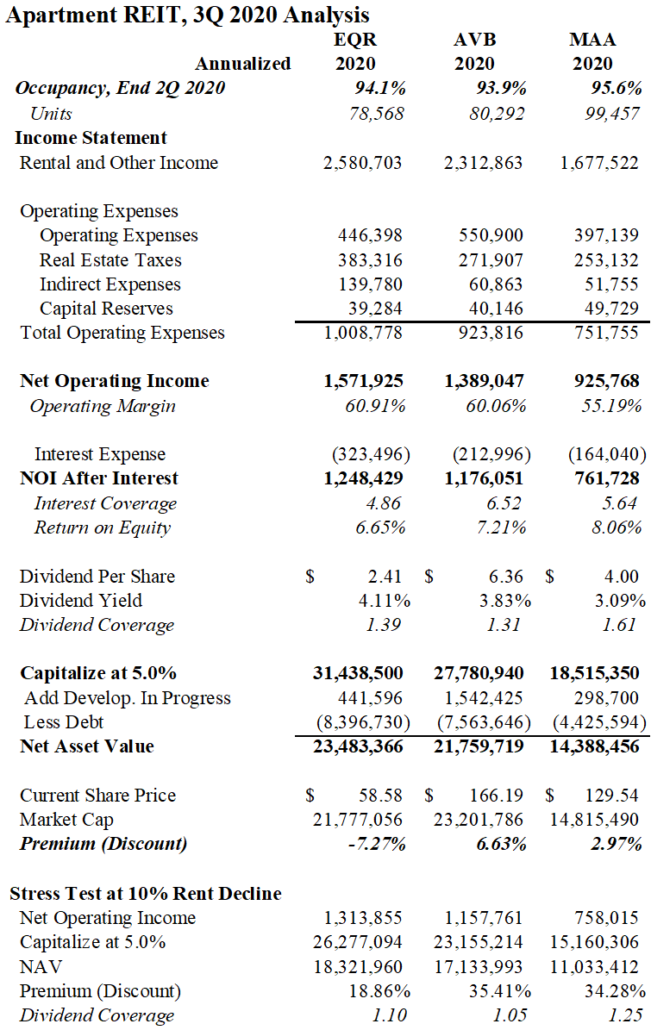
Back in August (which was eight months ago in pandemic time), I decided to look at quarterly results from publicly traded apartment owners to gain insights into where the market was heading. Third quarter results have been posted, so I revisited three of the biggest apartment real estate investment trusts: Equity Residential (EQR), AvalonBay (AVB) and Mid-America Apartment Communities (MAA).
The stocks have continued to trade at discounts to their
March peaks and their dividend yields exceed 3%. The announcement of a vaccine
breakthrough earlier this week sent the stock prices higher by 10%. The recent
price increases have largely erased the deep discounts to net asset values, but
they remain attractive as liquid income-producing investments. Their dividends
are well-funded, leverage is manageable, and it is hard to envision further
downside. EQR is the riskiest of the three because of the company’s high
exposure to struggling urban markets, but MAA remains the star of the group due
to its focus on sunbelt cities.
The attached article contains brief comments on the quarterly results, a numerical comparison of income and asset values as well as a back-of-the-envelope “stress test” to determine the safety of the dividend payments. Finally, I offer a few observations on the Omaha market where home purchases have caused increased turnover and vacancy.
Sunbelt Success Continues
Mid-America exhibits the divergence in the apartment
industry: urban coastal cities are losing residents and many are relocating to
dynamic growth centers in the south. As they had in August, executives exuded
confidence in their quarterly call. Occupancy exceeded 96% and traffic was
positive. Rent growth was muted due to increasing supply and competition from
home purchases but remained positive. MAA is a standout performer because of
its concentration in sunbelt cities throughout the southeast and Texas. The
stock has nearly recovered its losses for the year.
Suburban vs. Urban
AvalonBay and Equity Residential noted positive leasing
trends during October but reported that rent declines and move-outs exceeded
expectations in urban markets, particularly Manhattan, Boston, and San
Francisco. Rent declines surpassed 10% in big coastal cities. Occupancy dropped
below 90% in central San Francisco – a stunning figure. Meanwhile suburban
properties performed well. Overall occupancy at both firms was at the 94%
level. At AvalonBay, rents declined 6% for the quarter on a year-over-year
basis and 2% on a sequential quarterly basis. At EQR, rents declined 7.5% for the quarter on
a year-over-year basis and 2.7% on a sequential quarterly basis. Collections
remained strong – above 97%, but turnover increased. There were some glimmers
of hope in the New York City core where major rent discounts and incentives have
enticed bargain-hunters to seek upgrades within the market.
Similar Trends in Omaha
In large measure, the observations made by the leading
apartment executives on their earnings calls mirror our experience in Omaha.
Occupancy levels which had been above 95% for the past two years have fallen
dramatically over the past 90 days – approaching 93% in many areas of the city.
Effective occupancy may be even lower as one month of free rent has become a common
incentive.
Home Purchases Pressure the Top End
The top end of the Omaha apartment market has been hammered
by an acceleration of home-buying. Low interest rates are spurring a race to
purchase houses despite rising costs amid a tight inventory and expensive
lumber prices. There is a 2005-feel to the environment with a high number of
lease-breaks. It has not reached a mania level, but loose credit has allowed
buyers to emerge who probably wouldn’t have qualified for a mortgage at the
beginning of the year. In certain submarkets, added new apartment supply is
also depressing the leasing environment.
More Space
All three firms have noted an increase in demand for larger
apartments as working from home seems to have spurred a choice for bigger
apartments. Studios are difficult to rent across the country, and Omaha is no
exception. EQR reported that many of their Manhattan buildings have experienced
transfers to larger units within the same property.
Students and Lower-Income Challenges
EQR and AVB reported serious challenges in their Boston and
Cambridge properties due to a lack of students in the area. Omaha is no
different. Although UNO has strong enrollment figures, many have opted to
remain at parents’ homes. International students are a major driver of central
Omaha apartment demand, and they have not returned. Rent delinquencies had
vanished over the summer, but have made a growing re-appearance as stimulus
payments have been exhausted. Workers in the service sector are seeking
assistance once again. Delinquencies are not catastrophic – probably running
1%-2% higher – but the trend is worrying.
Stress Test
Last quarter, I used a hypothetical 5% income decline to
determine whether the firms could continue to fund their distributions. I
increased the pressure to 10% this time around. The dividends appear safe but
would certainly come close to being curtailed in such a scenario. It should be
noted that the 10% reduction of rental income was taken from an annualized rental
figure that already incorporates two quarters of rental declines. The
annualized figures are simply the aggregation of results through September 30,
2020 plus an assumption that 4th quarter results will match those of
the 3rd quarter.
Note: This article contains the opinions and
observations of the author. No investment recommendations are being provided
and no representations are made to the accuracy of the content provided.
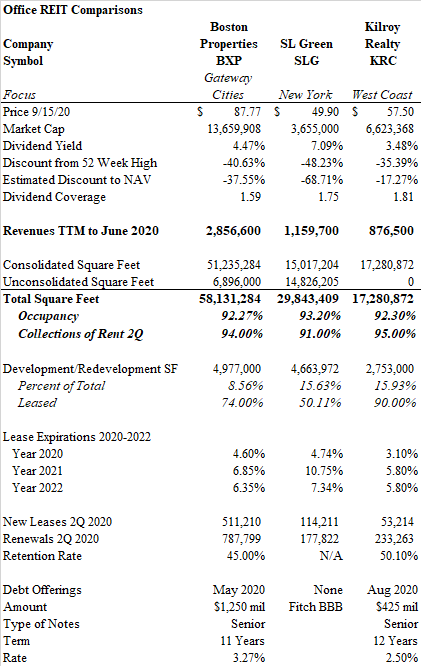
Commercial real estate is under pressure. Hospitality properties are in distress and many retail assets are struggling amid restaurant closures and the acceleration of online shopping. Thus far, long-term leases and high-quality tenant rosters have spared Class A office properties from pain. Second quarter results for major publicly traded office real estate investment trusts offer insights into the office markets of large cities, and their discounted stock prices appear to be attractive.
The second quarter
results for three office REITs were reviewed for this report: Boston Properties
(BXP), SL Green (SLG), and Kilroy Realty Trust (KRC).
Boston Properties is the
nation’s largest office REIT with over 51 million square feet owned directly,
and another 7 million owned through joint ventures. BXP has concentrations of
properties in New York, Boston, Washington, D.C., Los Angeles and San
Francisco. SL Green owns nearly 30 million square feet in New York City with
roughly half-and-half split between direct ownership and joint ventures. SLG
also holds nearly $1.2 billion of mortgages, mezzanine loans and preferred
equity positions in other New York properties. Kilroy Realty Trust has over 17
million square feet based on the west coast. It has a larger suburban portfolio
than the others, and its stock has performed comparatively well.
All office REIT executives believe their companies are well-prepared to weather the shift towards work-from-home arrangements. They have raised capital at low interest rates and bolstered their balance sheets. Lease expirations are minimal in the near term. Stocks are trading at considerable discounts to underlying asset values and offer hefty dividend yields. The ability to sustain dividend payments for the next two years seems likely and the discount to net asset values offers downside protection. Technology companies continue to lease new space. However, clouds hang on the horizon. A reduction in office floorplans seems inevitable. Financial firms may reduce headcounts as they reckon with tighter interest rate spreads and a rising collection of distressed assets in their portfolios. Meanwhile, working from home may not prove to be the revolution once envisioned in April, but certain jobs will remain permanently remote.
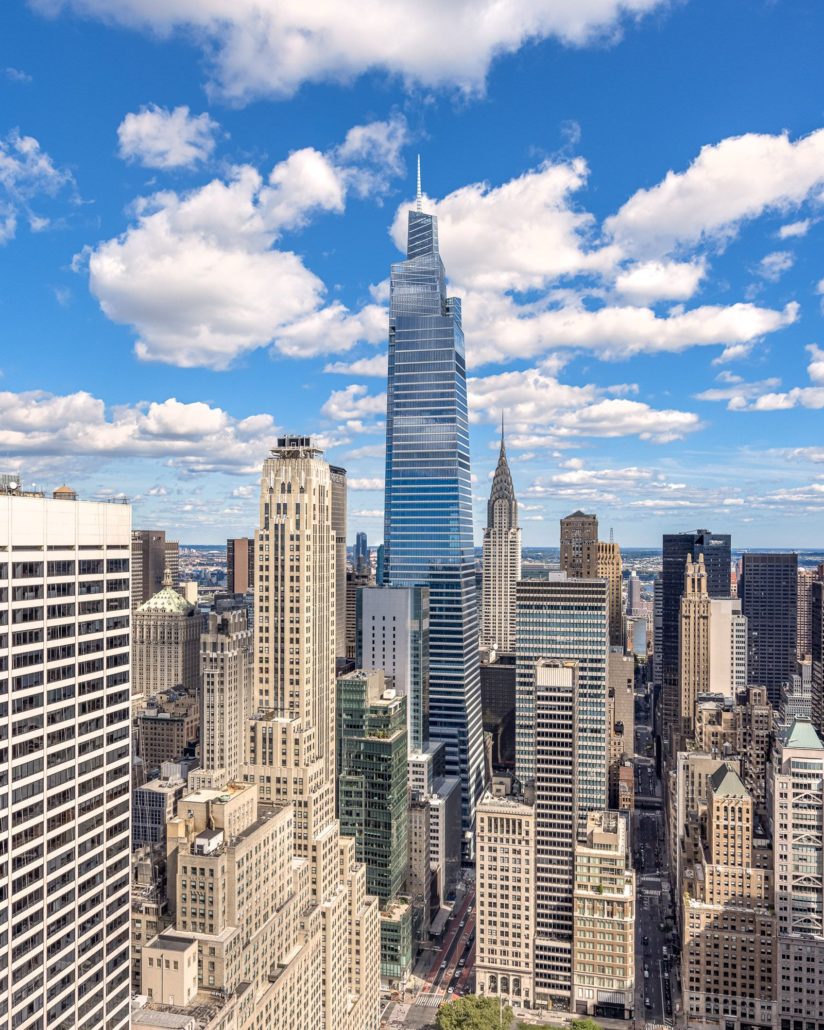
One Vanderbilt, SL Green
Note: This paper contains the opinions and interpretations of the
author. No representations are made regarding the accuracy of the material. The
views do not represent investment recommendations. All readers should perform
their own due diligence before making an investment decision.
Occupancy and Collections of Rent in the Second Quarter
All companies collected over 90% of rents during the second
quarter. BXP suffered from vacancy at its hotel properties, and both BXP and
SLG reported rent collections only slightly better than 50% for their retail
square footage. Yet office rent collections were better than feared. BXP and
KRC collected 98% of office rents and 96% of SLG’s office tenants paid during
the second quarter. Overall occupancy at the end of the June period stood
hovered near 93% for all three firms. However, the actual staff presence in the
buildings was minimal, with only about 10-15% physical occupancy for BXP and
SLG and 25% for KRC estimated during late July.
Financing
BXP and KRC took advantage of the decline in interest rates to
raise significant capital during the past six months while SL Green sold two
assets for over $600 million to bolster the balance sheet. In August, Kilroy
raised $425 million in senior notes at 2.5% due in 2032, and Boston Properties
issued $1.25 billion in senior secured notes at 3.25% maturing in 2031. Kilroy
raised $247 million in a March share offering. No new senior debt was issued at
SLG, although a couple of properties were refinanced. Fitch did affirm a BBB
credit rating for SL Green but revised its outlook to “negative”.
Office REITs trade at significan discounts to their pre-Covid highs.
Shareholder Benefits
All CEO’s believe that their balance sheets are well-positioned
for the next two years. Kilroy increased its dividend by 3% in August and SL
Green purchased $163 million of stock during the second quarter.
Leasing Activity
Despite the pandemic, leasing activity did continue at muted
levels. All three companies renewed about 1.5% of their portfolio with an
approximate retention rate of 50%. BXP signed a major new lease for 400,000
square feet with Microsoft at its Reston, Virginia property. BXP and KRC have
minimal lease expirations over the next three years with KRC at roughly 4% per
year through 2022 and BXP closer to 6%. Kilroy has 85% of its space
concentrated in low and mid-rise buildings. SL Green has minimal exposure in 2020
but faces a worrying 11% expiration level in 2021.
Kilroy and Boston Properties are bullish on markets where
technology and life science businesses are showing resilience and even growth
during the pandemic. While Facebook, Google and Amazon grab the most headlines,
the emergence of laboratory needs in the biotechnology and pharmaceutical
industry is equally fascinating. These companies are viewed as more likely to
take up new space in coming years as the office environment remains necessary
to foster collaboration and company culture. Both firms show interest in the
Seattle market while BXP seeks further growth in the technology hotspots near
the Los Angeles beaches. A notable bright spot during the doom and gloom of New
York City’s pandemic challenges was Vornado’s signing of Facebook to a 730,000
square foot lease in the former post office building near Penn Station.
DropBox headquarters in Mission Bay, San Francisco
Development Activity
All three REITs have significant development activity which
accounts for between 9-15% of the total square footage inventory for each
company. While these developments pose risk should they fall short of targets,
all CEOs noted that they had adequate liquidity to finish the projects. 90% of
KRC’s pipeline is leased while BXP has 74% leased in their upcoming projects.
SL Green has higher leasing risk, as was cited in the Fitch ratings downgrade,
with 50% of new square feet committed. Among all three companies’ projects in
development, the most prominent is the 77 story SL Green tower known as One
Vanderbilt – a 1.5 million square foot building near Grand Central Station
which is 70% leased and opens this week. The project is a landmark $3 billion
asset. The opening generated enough excitement to propel the stock upwards by
over 10%. SL Green is also partnering with a Korean pension fund on the $2.3
billion redevelopment of One Madison Avenue. The space is not scheduled for
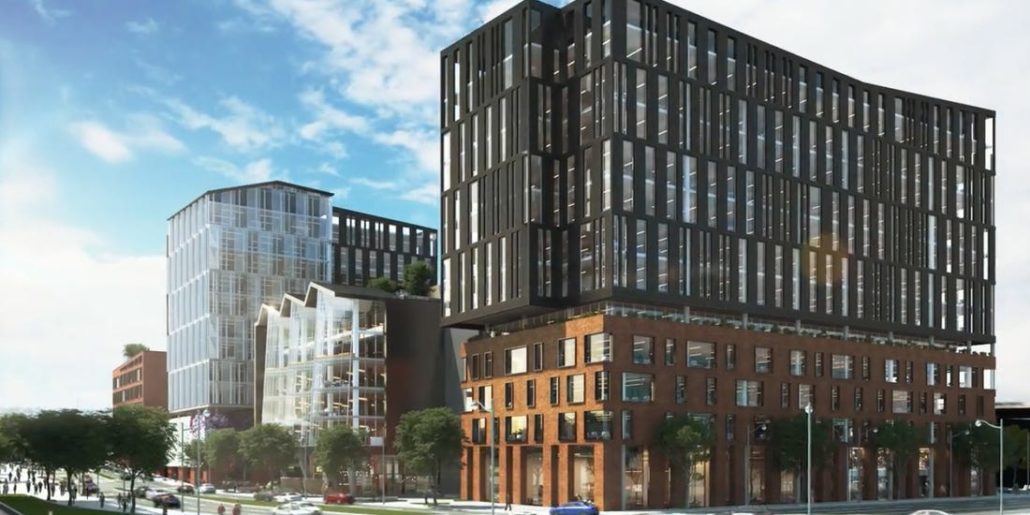
delivery until 2024. Kilroy is in a strong position with its development
projects. KRC will soon be opening a 355,000 square foot building in Hollywood
fully leased to Netflix and another 635,000 square foot building in Seattle
100% leased to a Fortune 50 company. Another 285,000 square feet in San Diego
will come online in 2021 with 91% of the space leased.
Sublease Risks
One of the factors most likely to suppress future rents is the
likelihood that surplus space is placed on the market by current tenants. These
subleases become phantom vacancy that is nearly always offered at below-market
rents. CEO John Kilroy did not view the subleasing environment as overly
worrying. In reference to San Francisco in particular, he offered, “Sublease
space in the market right now is about 5 million square feet… 2.3 million was
added during Covid… to put that into perspective, the direct vacancy rate in
San Francisco right now is about 5.4% and sublease is 2.5% of that. To compare
that to the dot-com bust, direct vacancy was 8.3% and sublease space with
6.8%.” However, despite the CEO’s comments, Kilroy identified sublease space in
its 10-Q, the first time in several quarters such information was broken out.
849,000 square feet in the portfolio was listed for sublease, or nearly six
percent of the portfolio. About half the space was noted as vacant. In late
July, DropBox announced it would list 270,000 sf for lease, nearly 1/3rd of its
offices, in the newly opened Kilroy development in Mission Bay, San Francisco.
Meanwhile, Boston Properties was impacted by the bankruptcy of Ann Taylor’s
parent company which occupies 340,000 sf in Times Square. It would seem likely
that even if a bankruptcy restructuring is successful, surplus space will find
it’s way onto the market.
SL Green Challenges
SL Green is the most difficult office REIT to analyze. Nearly half
of the company’s square footage is held in joint ventures which are not
consolidated in the operating revenues and expenses. The company also has a
complicated portfolio of first mortgages, mezzanine loans and preferred equity
positions in various properties in New York. SLG also owns many properties
encumbered by ground leases.
Indeed, some mezzanine loan positions appear to be under pressure.
On September 2nd, it was reported that SL Green bought the $90 million first
mortgage for 590 Fifth Avenue after Thor Equities defaulted on a $25 million
mezzanine note. The property is a 19 story 100,000 sf building. The mezzanine business
cuts both ways for SL Green. A distressed developer who falls behind on their
mezzanine financing could present an opportunity for SL Green to pick up assets
for the value of the first mortgage. In most cases, these will be bargain
acquisitions. Unfortunately, the impairment of a mezzanine loan is in itself a
damaging blow to the balance sheet and the need to muster capital to protect a
junior debt position could require deeper pockets than the company anticipates.
While two asset sales reinforced cash positions, the failed $815
million sale of the Daily News Building in March offered an indication of the
challenges valuing New York office assets in a post-pandemic world after
Deutsche Bank pulled financing for the deal. SLG was able to refinance the
property in June with a $510 million mortgage from a lender consortium. SL
Green is also considering the sale of its two multifamily properties.
Kilroy’s Netflix campus: Academy on Vine
Investment Evaluation
SL Green has seen its stock hammered by the pandemic. Down by
nearly 50%, SLG’s dividend yield exceeds 7%. Boston Properties has faced a 40%
decline and offers a yield of 4.4%. Meanwhile, Kilroy lost 35% since its
pre-Covid highs and yields 3.45%
In the process of evaluating the stocks, I made simple
assumptions. Some may argue that these are too elementary, but the exercise was
intended to discover whether the public market is significantly undervaluing
the underlying assets by a wide enough margin to provide an element of downside
protection. I was not intent on arriving at a precise valuation of the
businesses.
My method was to annualize pro forma income simply by taking
second quarter revenues and multiplying them by four. This may prove generous
in the event further occupancy problems arise; it also is punitive for the
companies. For example, the methodology assigns no future income for the
Mission Bay/DropBox property placed in service. It also ignores the 70%
occupancy of One Vanderbilt placed in service by SLG. It gives no value to the
new BXP leasing in Virginia. In all cases, the exercise merely values the development
assets at cost. The only upside “help” that was given by the author was a
slight uptick in hotel revenues attributed to BXP during the balance of two
quarters.
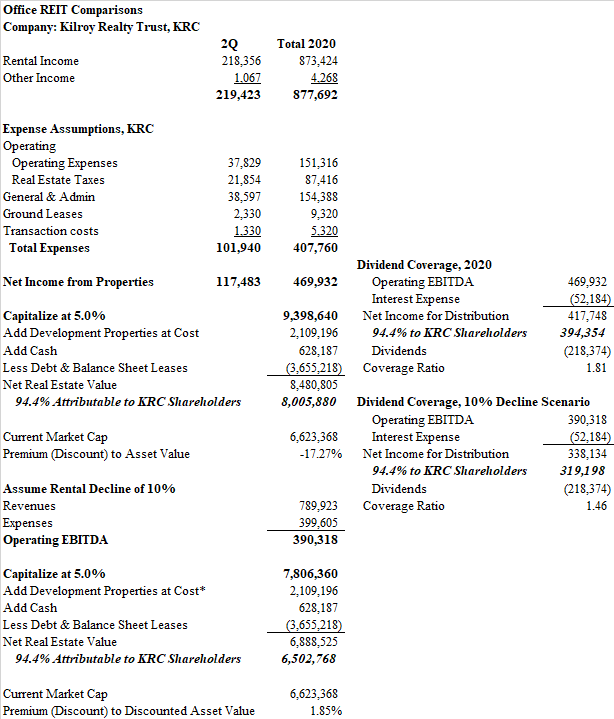
I capitalized the net income at 5.0% for KRC due to its high level
of low and mid-rise buildings, 5.25% for BXP, and 5.5% for SLG. Certainly,
before the pandemic, these cap rates would be considered high for trophy office
properties in major urban areas. I added the cash on the balance sheet and
subtracted debt to arrive at a net asset value. All in-progress development
projects were added at cost. Joint venture assets were included in the income
statement computations to the extent that they were reflected in the ownership
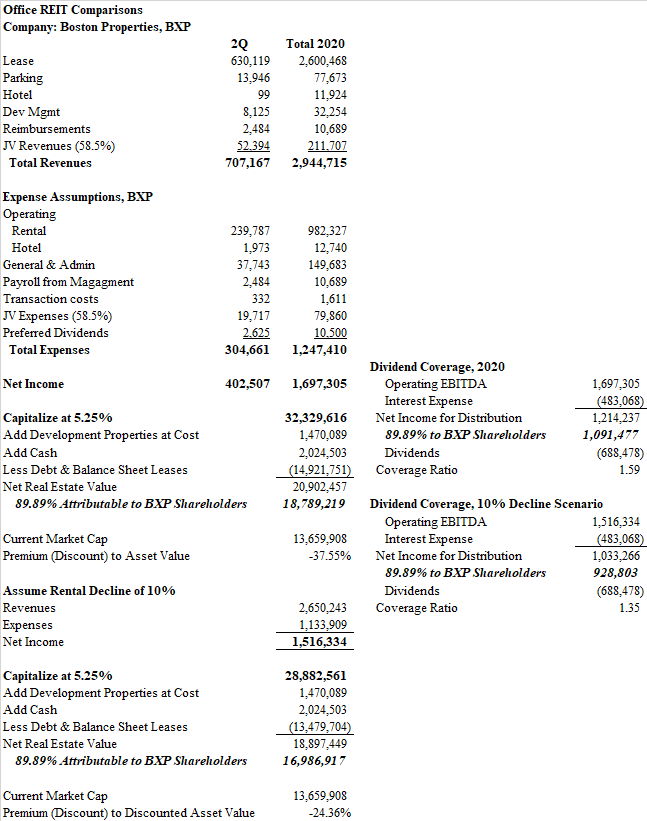
percentages. The result is a 70% value discount for SLG, and a 38% discount for
BXP. KRC is selling for a 17% discount. On the income side, I calculated the
dividend coverage ratios: BXP stands at 1.6x, SLG 1.7x and KRC 1.8x.
Next, I performed a stress test analysis that reduced revenues by
10%. In the case of SL Green, I also deemed their property loan portfolio to be
50% impaired. Even with this penalty, SLG appears to trade at par to net asset
value. Meanwhile BXP would seem to be 24% below value as well. KRC with its
under-estimated future income looks to be valued at par after the stress
test. In this example, BXP and KRC could continue to comfortably fund
their dividends but SLG would be under pressure to reduce shareholder payments.
Paradigm Shift
While all three companies trade at steep discounts, one can’t help
but wonder if the world will look back at this moment and ask why real estate
experts underestimated the paradigm shift of working from home. If it worked
pretty well for 6 months for most office workers, why can’t it work
permanently? If nothing more, workers got 1-2 hours of their days back by not
facing a long commute into the city center. This increase in productivity alone
is tangible.
Of course, as the weeks have dragged on, frustration has set in
with the arrangement. JP Morgan CEO Jamie Dimon has summoned traders back to
their desks and recently noted a decline in productivity among employees at the
banking giant. Zoom meetings can’t replace the 80% of communication that occurs
through body language, and even a micro-second lag on a call is maddening after
the third time someone interrupts. The office is a vital asset in our knowledge
and information-based economy. Ideas and culture are the engines of growth. But
data entry, call centers, accounting and routine back office functions seem to
need nothing more than a good workstation in the den along with a high-speed
data connection. Office leases will take 2-5 years to expire, but what if all
companies simply reduced their footprints by 10%? My stress test may prove to
be too light.
Conclusion
Kilroy and Boston Properties are the most appealing investments.
The balance sheets have been fortified and leasing activity for the companies’
new developments is robust. Kilroy’s exposure to suburban markets offers a
hedge against central business districts in major cities, and BXP has a
well-diversified geographic portfolio. Meanwhile, despite the steep discount,
SL Green appears to be the riskiest of the three REITs. The concentration in
New York City is worrisome. While some may argue that the risk is reflected in
the added discount, it is worth noting the SL Green executives had been
appealing to investors as recently as the fall of 2019 that the stock traded at
an unjustified discount of 25% to its peers. A risky mezzanine portfolio and the
complexity of its joint venture arrangements could pose future challenges.
The most encouraging future for office properties lies in the
technology and life sciences industries. Despite recent sublease announcements,
Both Kilroy and Boston Properties are aggressively pursuing these vanguard
companies with visible degrees of success. Meanwhile, the transformation of New
York City into a technology hub is well under way. The question is now raised:
can technology employment grow fast enough to replace the shrinking office
needs of remote workers?
http://www.alchemydevelopment.com/wp-content/uploads/2017/07/AlchemyLogo-1030x233.jpg00adminhttp://www.alchemydevelopment.com/wp-content/uploads/2017/07/AlchemyLogo-1030x233.jpgadmin2020-09-16 01:30:562020-09-16 01:34:05Office REITs: Value Opportunity or Value Trap?
I have listened to the second quarter earnings conference calls for three of the largest apartment real estate investment trusts: Equity Residential Trust (EQR), AvalonBay Communities (AVB), and Mid-America Apartment Communities (MAA). Together they own over 250,000 apartments. I was struck by the generally positive tone in spite of our troubled economy. I have assembled a research report that you may find interesting.
Apartment REITs Remain Near March Lows
If you’re pressed for time, here is the HEADLINE: Using reasonable assumptions, apartment REITs are currently trading at discounts to the underlying value of their assets. In my estimation, at the current moment, purchasing a liquid security with low debt backed by the best multifamily properties in America yielding 4% is a better prospect than buying an apartment complex yielding 6% with 75% leverage.
All three REITs reported collections from April to June that were ahead of projections made during the crisis moments of March. All experienced a decline of about 2% on collected rents. The unemployment insurance program and $1,200 stimulus checks certainly helped. Our experience in the Omaha metro area has been similar. Collections declined by 1% during the April-June period and even lower during July in our area. Executives claimed that June and July leasing activity had returned to 2019 levels. Resident turnover was 2-3% below the same period in 2019.
CAPITAL IS CHEAP
All companies took advantage of low interest rates. AvalonBay issued $600 million in bonds at 2.5%, Equity Residential received a $495 million secured loan at 2.6%, and Mid-America issued $450 million in senior secured notes at 1.7%. All companies have healthy cash positions and exhibit better credit ratings than during the 2008-09 recession. AvalonBay felt confident enough to authorize a $500 million stock buyback program. Low rates were not entirely a favorable factor: AvalonBay and Mid-America each noted that occupancy was hindered by home purchases driven by low interest rates. This trend has also been evident in our market.
CONSTRUCTION STARTS SUSPENDED
All three companies have cancelled new development projects with expectations of weakened rent growth and a belief that construction costs will decline as most commercial and hospitality projects are suspended indefinitely. AvalonBay had noted that construction costs in major coastal metros have declined by 5-7%.
URBAN PROBLEMS vs SUBURBAN SUCCESS
Equity Residential and AvalonBay have the majority of their portfolios located in major metropolitan areas on the coasts. The contrast in performance between urban and suburban markets was profound. AVB and EQR have 33% and 25% of their units in urban central business districts, respectively. Equity Residential and AvalonBay faced difficult headwinds in their urban properties. New leases in urban areas posted rent rates as much as 8% below earlier quarters, and renewal rents dropped by 1%. Vacancy levels approaching 9% were reported in central business districts of San Francisco, Boston and New York. The increase in work-from-anywhere employment has been compounded by a loss of foreign workers and college students in these areas. EQR noted that while 4% of revenues are attributable to commercial tenants, only 60% were paying rent – an ominous sign for central business district retail performance.
Executives at EQR and AVB were encouraged by positive summer leasing trends at their suburban communities. New lease activity was strong enough to help overall company-wide occupancy levels exceed 94%. Overall, company-wide quarterly revenues were down 2.4% at EQR and roughly flat at AVB.
SUNBELT SATISFACTION
Mid-America operates assets in the sunbelt: The Dallas metro, Atlanta, Nashville, the Carolinas, and Austin all feature prominently in their portfolio. MAA executives were ecstatic with their results. Effective rents for new leases at MAA were up 3.4% for the quarter. Occupancy exceeded 95%. Overall revenue for the quarter was up 1.4% over 2019 at MAA. Executives were confident that migration trends toward sunbelt metros would continue, and had seen evidence of acceleration.
INVESTMENT OPPORTUNITY?
All three companies are trading well below February levels. EQR trades at a 40% discount to the February high, AVB is down 34% and MAA is 20% lower. Meanwhile, EQR and AVB sport dividend yields in excess of 4% and MAA has a yield of 3.4%. In a world of zero percent Treasuries, the dividends are appealing.
The three apartment giants appear to be trading at a discount to their net asset values.
I present a table on the attached pdf comparing the three companies. Some of you may take issue with my simple methodology, but I think the calculations fairly portray a set of businesses that may be undervalued. For annualized revenues, I doubled the first half of 2020. Executives generally opined that markets had stabilized, so I am taking their remarks at face value. I included a $50 per unit capital reserve in my estimates to arrive at a pro forma net operating income level. The results show that all three companies have adequate dividend coverage between 1.38x for EQR to 1.78x for MAA.
I employed a 5% capitalization rate to arrive at a value. Some could argue that this is a low number on a risk-adjusted basis, but as the cost of funds drifts below 3% the cap rate seems reasonable. Cap rates in space-constrained urban markets were well below 5% heading into March. The results indicate that public market discounts to net asset values range from 6% for AvalonBay to 20% for Equity Residential.
Finally, I reduced my revenue assumption by 5% to determine the impact on values and dividend coverage. In this exercise, all three were comfortably able to maintain their shareholder distributions. Current share prices were roughly in line with net asset values in this example.
There is no question that the pandemic will continue to negatively impact the economy. Indeed, it will be interesting to see if MAA bosses are less optimistic on the next call as Covid cases sweep across the south. I do believe there will eventually be meaningful negative impacts on white collar employment that has thus far been spared the brunt of the layoff pain. Could revenues decline by 10%? It is very possible. I do not subscribe to the conventional wisdom that “everybody needs a place to live, so apartments will be just fine”. Young professionals under the age of 30 can find their parents’ homes just as welcoming as they did during the 2008-2012 period. However, I do believe much of the downside risks have been reflected in the current share prices. These three companies boast some of the finest apartment assets in North America. Their balance sheets are strong and the dividends are well-covered.
Please let me know if you have any comments or criticisms. I am interested in all perspectives. A disclaimer: These numbers represent my opinions and should not form the basis of any investment decisions.
Noddle Cos. estimates that private investment within Aksarben Village has topped $630 million. Those involved since the onset say the project, boosted by tens of millions of public dollars, has exceeded expectations. Office and research space has doubled the amount projected to be built; the number of hotel rooms and residences also have surpassed early predictions.
HISTORY:
To
better understand the land evolution near 67th and Center Streets, one can step
back 25 years to when elite horse racing died at the longtime entertainment
venue. Controversy soon erupted as diverging interests vied for control of
Ak-Sar-Ben land then publicly owned by Douglas County.
One
group wanted to restart racing in an effort that some suspected would lead to
casino gambling. Business leaders resisted, instead supporting a sale to First
Data Resources, which was looking for space to grow.
First
Data bought the northern 140 acres of the Ak-Sar-Ben grounds in 1996 and subsequently
donated a large chunk to the University of Nebraska for a high-tech learning
campus featuring the Peter Kiewit and Scott Technology educational institutes
and student dorms.
As
community leaders in the mid-2000s pondered what to do with remaining land to
the south, HDR’s Doug Bisson stepped up to say Omaha had the chance to be at
the forefront of an emerging “new urbanism” trend of creating walkable
neighborhoods inside cities.
At
the time, he was a neighborhood representative on the board of the Ak-Sar-Ben
Future Trust, a nonprofit that by then had acquired the former
horse track and coliseum.
That
idea of resurrecting the familiar grounds with a mix of residences, retailers,
offices and entertainment resonated with community officials including Ken
Stinson, chairman of the future trust. Said Stinson back then: “We were trying
to do things that we couldn’t find in a cookbook.”
A handful of developers, with
Noddle Cos. as lead, accepted the challenge to transform the 70 acres into a
kind of pedestrian-friendly, mixed-use hub that was becoming the rage in urban
parts elsewhere across the country, Bisson said.
Noddle
recalls drawing up, in 2005, the first site proposal for what would become
Aksarben Village. Actual construction launched in 2007 with the thought that it
could take about 12 years to fill out between Center Street on the south, the
University of Nebraska at Omaha’s south campus on the north, and from 63rd
Street west to the Keystone Trail.
Looking
back, Bert Hancock of Alchemy Development, who was among those original
developers, said one of the most stunning results is the village’s allure as a
home for corporate bases. “While I think everyone envisioned a strong
employment base, the headquarters
of HDR, Green Plains,
Blue Cross, Right at Home, etc., have elevated Aksarben Village’s status as a major
corporate center,” he said.
HDR’s
near ten story headquarters located in Aksarben Village accompanied by a
neighboring building with restaurants, businesses and offices near Mercy Road
and south 67th Street in February.
NEW DEVELOPMENTS:
Earlier
this year, engineering and architectural firm HDR held the grand opening of its
10-story global headquarters leased from the Noddle-Bradford partnership.
Across the street, a five-story office building is rising and in January will
be corporate headquarters for Right at Home.
That
100,000-square-foot building, a project of Magnum Development and McNeil Co.,
will have room for other tenants and retailers on the ground floor. It joins a
city block within the village that also features a 10-screen movie theater,
restaurants, bars and Pacific Life offices.
Other
newbies headed to Aksarben Village:
A
110,000-square-foot, multitenant office building is to rise behind the new HDR
headquarters, facing Frances Street, probably later this year, Noddle said. “We
own the land, there is demand,” he said, though adding that construction won’t
start before he secures an anchor tenant. The HDR parking garage will be
enlarged to accommodate additional vehicles.
Noddle
Cos. this year also plans to start building the village’s first for-sale homes.
Called 64 Ave, the seven town houses along 64th Avenue north of Center will be
about 1,600 square feet apiece, rise three floors and have two-car garages.
This would be Noddle Cos.’ debut in the residential construction market.
Set
to open this summer is the food, retail and entertainment alleyway between the
HDR headquarters and its parking structure. The plaza will be
called the Inner Rail, a nod to the area’s history
as a racetrack. It’s gotten city approval to be an “entertainment district,”
which will allow alcoholic drinks in the plaza.
Alchemy
Development is to build two more housing projects, bringing on 124 units and $18
million in investment, to the southeast and northeast corners of the HDR
headquarters block. One is to start this year, Hancock said. Alchemy already
has 227 apartments at the village in Pinhook Flats and the Cue. (Broadmoor
Development also has built hundreds of apartments at the village.)
Yet
to be developed, Noddle said, is about seven acres next to HDR that’s reserved for
its possible expansion, and a few other scattered
pieces.
http://www.alchemydevelopment.com/wp-content/uploads/2017/07/AlchemyLogo-1030x233.jpg00adminhttp://www.alchemydevelopment.com/wp-content/uploads/2017/07/AlchemyLogo-1030x233.jpgadmin2019-03-29 22:46:042024-12-15 16:43:37Aksarben Village, 15 years in the making, is nearing the finish line
ZONE 6 APARTMENTS, AKSARBEN VILLAGE 64TH AVENUE AND FRANCES STREET OMAHA NE
HDR Tower, Aksarben Village
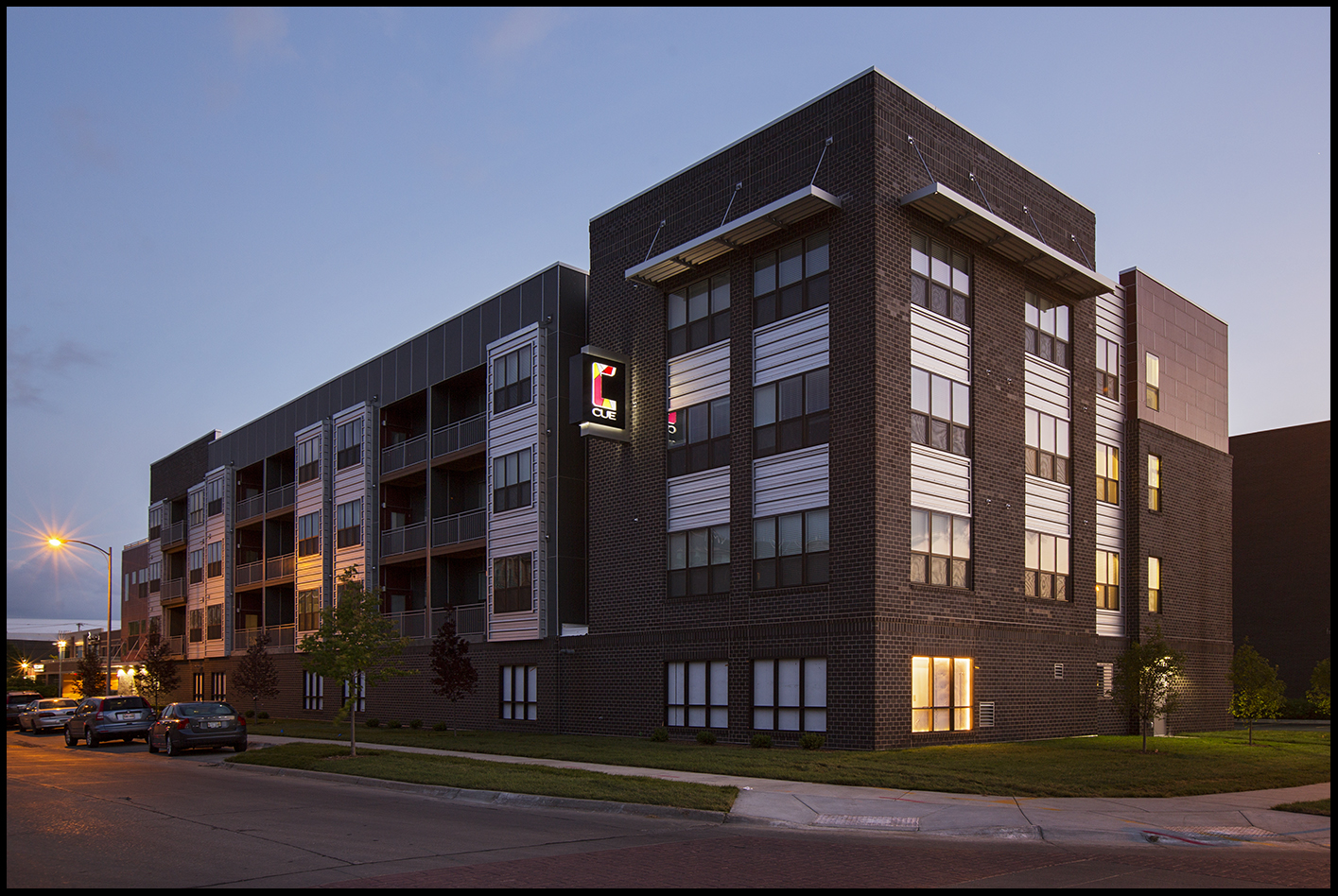
We are excited to announce our newest apartment project in Aksarben Village. The building will feature 62 studio, one and two-bedroom units. We expect completion in early 2021. This building will be adjacent to to our other projects Pinhook Flats and CUE Apartments.
We welcome our newest neighbors: 950 HDR employees now working at the the new eleven-story HDR Headquarters.
http://www.alchemydevelopment.com/wp-content/uploads/2017/07/AlchemyLogo-1030x233.jpg00adminhttp://www.alchemydevelopment.com/wp-content/uploads/2017/07/AlchemyLogo-1030x233.jpgadmin2019-01-23 23:26:462024-12-15 16:44:36An aerial view of our new project in Aksarben Village
By now, just about everyone knows the boiling frog metaphor. The business parable now sits among the regal pantheon of Vince Lombardi quotes, TedTalks about body postures, and the mystical epiphanies which occur when you gaze deeply in your Steve Jobs mirror. So let’s take the boiling frog story and give it a new level of sophistication. We’ll call it the Big Lebowski moment. This moment occurs when you are chilling out in your bathtub, just like The Dude. Your candles softly glow, the water is nice and warm, and you probably just had some help to induce your tranquil state.
The Dude Abides
For real estate developers, this can be like the construction phase of the project. You’ve done the heavy lifting of designing the building and gaining approvals from the city. You’ve negotiated the contracts and obtained your financing. You sit back a little and marvel as your dream leaps off the paper (or digital file) and becomes reality. This building is really happening. Sure, you will worry about the rogue subcontractor, the deadlines that may ebb and flow, and the weather, but if you’ve set yourself up with a well-planned project you will enjoy the next 18 months.
Once construction winds down, the stress starts kicking in. Will my glorious creature be the pony that every child wants to ride or do I have an old nag who buries its nose in clover when a rider approaches? Or, even worse, did I open one of those dodgy carnivals in a parking lot of a vacant retail strip center and my ponies just got quarantined by the Douglas County Health Department? Rents get adjusted, special lease incentives are offered, sweat beads appear on your brow and the pulse quickens. In Big Lebowski terms, The Nihilists have just arrived while you’re sitting in the tub, and they’ve started to break your stuff in the living room.
It gets worse. The Nihilists have brought a weasel with them (Hey, is that a marmot, man?). They throw the weasel in the bathtub. All hell breaks loose as the furry ferret turns into a screeching water snake keen on drawing blood from a sensitive region of the body. The tranquil tub becomes a frothing cauldron. For real estate developers, the angry weasel represents their debt. Real estate projects are highly dependent upon leverage. Most developers borrow 70% to 80% of their total project costs. Rising interest rates can threaten even the best developments.
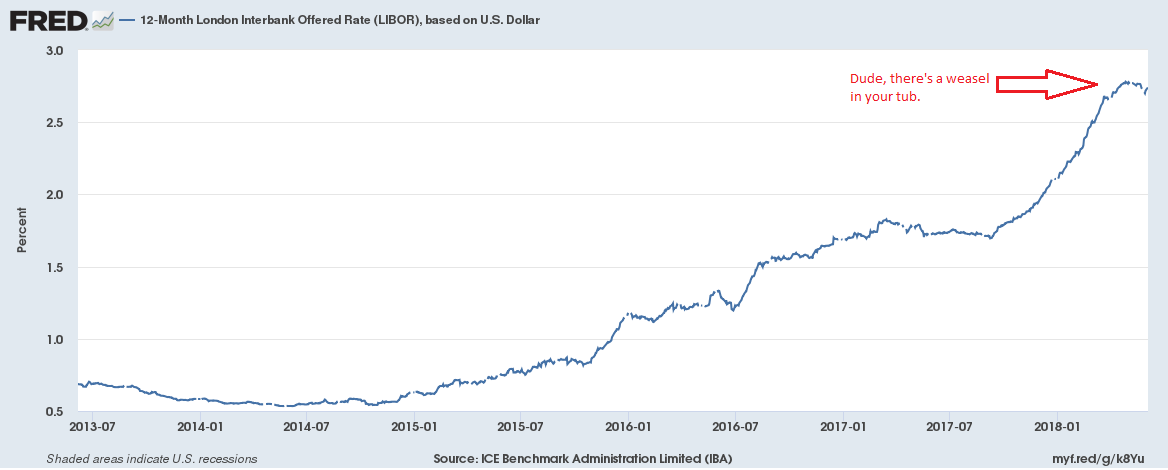
Most construction loans have an interest-only period that terminate about 24 to 36 months after the start of construction. The end of the term is often referred to as the “conversion date”: the date at which the loan resets. On the conversion date, the interest rate adjusts to the current market level and the developer must begin paying some principal on the loan. For the past five years, rates have been in an innocuous range around 4%. Conversion dates came and went without much trepidation. Now, rates have risen dramatically. Many construction loans that were marked at LIBOR plus 3% two years ago will soon reset in a new and very weasel-ish world of 5% rates. One-year LIBOR sat at 1.73% in June of 2017, today it sits at 2.74%.
Well, that’s not so bad, you may say. After all it’s only 1% higher than it was a year ago. Yes, but the problem is exponential: your cost of money just went up by 20%. If you borrowed $10 million to build 100 apartments, you now face an additional $100,000 per year in interest expenses. On a per unit basis, that’s $83 per unit per month that you need to generate. From where I sit in Heartland, USA, $83 per month is a substantial amount of money. It’s probably a 10% increase on a one-bedroom apartment. My sister lives in San Francsco where they step over $100 dollar bills like soiled pennies, but here the number is the difference between two tanks of gas or an upper deck seat to see Kendrick Lamar. In other words, its a problem.
In a market facing over-supply, the pressure could become intense. Apartment construction has exceeded rates of household formation for the past six quarters. Higher interest rates will add to the challenges and pose a threat to developers in a way that has not been witnessed since 2007.
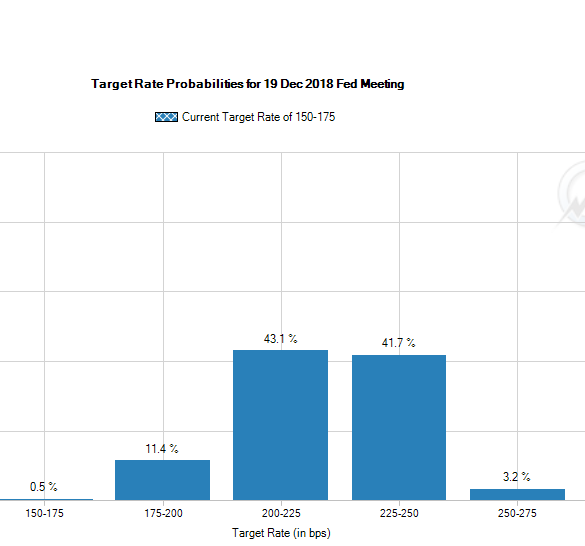
The interest rate environment places the Federal Reserve in a complicated position. The effective Federal Funds Rate is 1.75% and a 25 basis point increase is expected this week. Right now, markets place a probability of 41.7% on rates landing in the range of 2.25% to 2.5% by the December 2018 meeting.
Source: CME Group
There are three problems with this outlook:
The 10 Year Treasury Yield stands at 2.96%. A surge in short term rates would almost certainly invert the yield curve – a signal that portends most recessions. The 5 Year Treasury is already at 2.80% which demonstrates a flattening yield curve.
LIBOR rates track short term Fed Funds rates. Most short term financing is set on LIBOR plus a spread. If you extrapolate my example above regarding apartment rents to the entire economy, I do not believe that borrowers can cope with another 1% increase in the cost of short term funds.
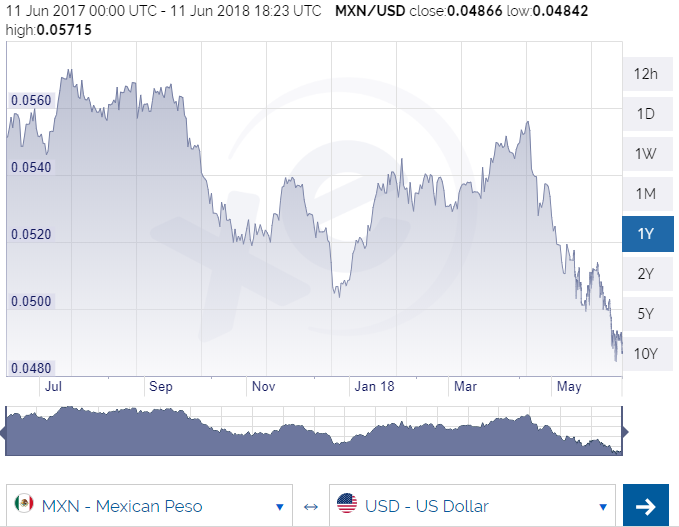
Increased rates will draw capital to the US and strengthen the US Dollar. The foreshadowing of this momentum has already set central banks into a frenzy of currency market intervention in Turkey, Brazil and Argentina. If the Mexican Peso joins the crowd, you could have a full blown currency crisis like 1994 or 1998.
The Mexican Peso (MXN) has fallen dramatically against the US Dollar (USD) since April. Source XE.com Currency Charts
Therefore, Jerome Powell must walk a tightrope. He must work to reduce inflation pressure and curb lending excesses, yet the risk of a recession rises with each quarter-point increase. He surely does not wish to create a lending crisis.
The intersection of interest rates, inflation and housing is even more complicated. Most measurements of the CPI show that housing costs are the major driver of inflation. I highly recommend reading the Bloomberg piece on the topic. There is some frustrating irony here: my industry, the one most susceptible to the risks of rising interest rates, is also the cause of the inflation which requires the Fed to raise rates. It’s a logical spiral that circles the drain like dirty water in a candlelit southern California bathtub.
http://www.alchemydevelopment.com/wp-content/uploads/2017/07/AlchemyLogo-1030x233.jpg00adminhttp://www.alchemydevelopment.com/wp-content/uploads/2017/07/AlchemyLogo-1030x233.jpgadmin2018-06-11 18:50:112018-06-11 22:19:40Apartment Development has a Big Lebowski Moment
http://www.alchemydevelopment.com/wp-content/uploads/2017/07/AlchemyLogo-1030x233.jpg00adminhttp://www.alchemydevelopment.com/wp-content/uploads/2017/07/AlchemyLogo-1030x233.jpgadmin2017-06-30 21:08:012017-06-30 21:08:01Construction is Completed at Shadow Lake Square
http://www.alchemydevelopment.com/wp-content/uploads/2017/07/AlchemyLogo-1030x233.jpg00adminhttp://www.alchemydevelopment.com/wp-content/uploads/2017/07/AlchemyLogo-1030x233.jpgadmin2016-07-13 18:40:152016-07-13 18:41:13CUE is now open in Aksarben Village